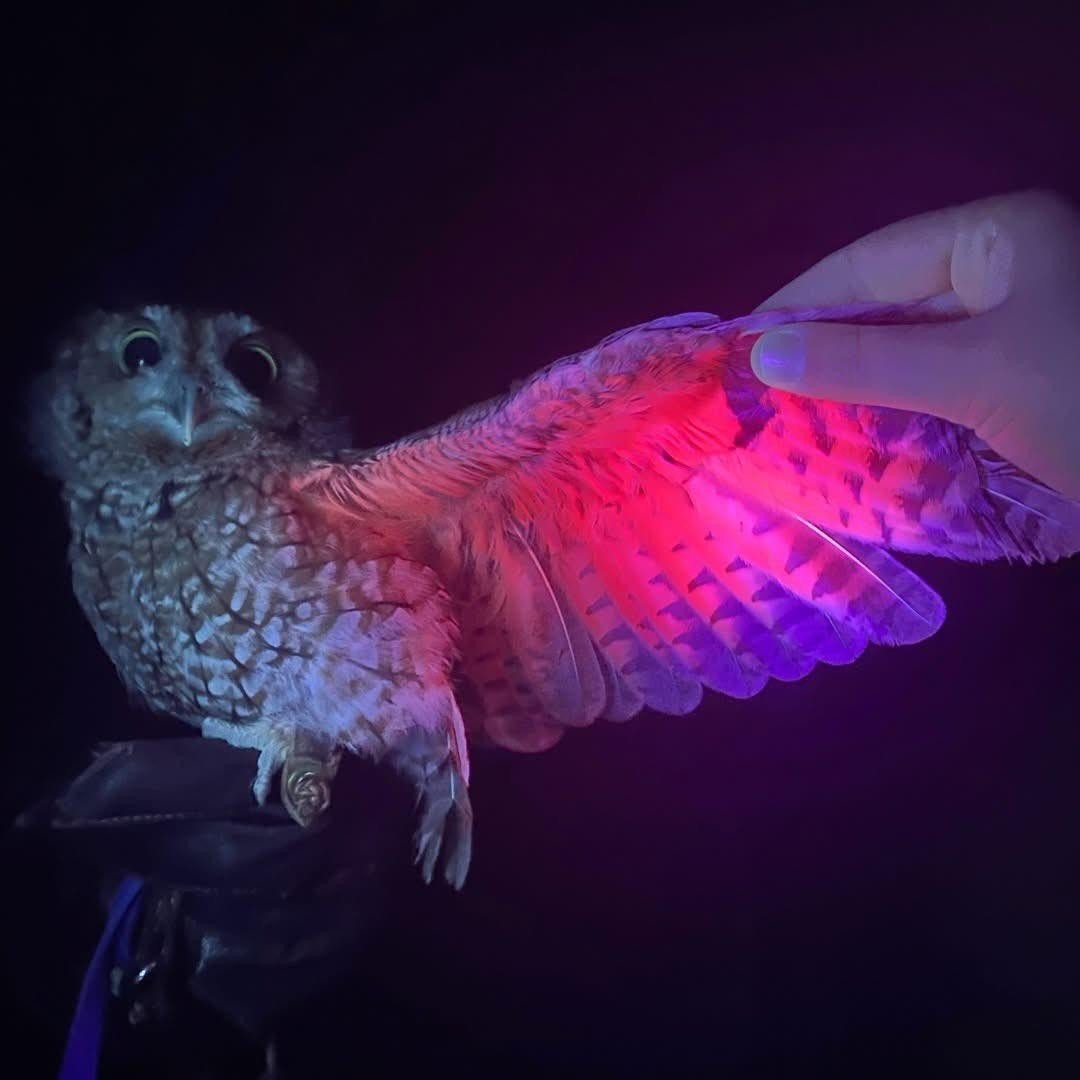
Owl feathers can glow pink or magenta under ultraviolet (UV) light.
The glow comes from porphyrins, pigments naturally present in some owl feathers. When exposed to UV light, these pigments fluoresce, producing a striking pink or reddish glow.
As feathers age and wear, their porphyrins gradually break down, causing the intensity of their fluorescence to decrease. Researchers can use these differences to identify newly grown feathers and distinguish different generations of feathers across an owl’s wing.
These fluorescence patterns can also provide clues about a bird’s age by revealing its molt history.
“مَا تَرَىٰ فِي خَلْقِ الرَّحْمَٰنِ مِن تَفَاوُتٍ ۖ فَارْجِعِ الْبَصَرَ هَلْ تَرَىٰ مِن فُطُورٍ”
“You do not see in the creation of the Most Compassionate any inconsistency. So look again: do you see any flaw?”
— The Qur’an, Surah Al-Mulk (67:3)
The hidden wonders of creation reveal extraordinary details—from the intricate structure of an owl’s feathers to the fascinating fluorescence of natural pigments under ultraviolet light. Even what is invisible to the naked eye can inspire us to reflect upon the precision and beauty of Allah Subhanahu wa Ta‘ala’s creation.